Introduction to Xen
Xen is a hypervisor — software that allows multiple operating systems to run simultaneously on a single physical machine. It was first released in 2003 and has been in continuous production use for over 22 years.
What makes Xen different
Xen is a Type 1 (bare-metal) hypervisor. It runs directly on the hardware, without an underlying operating system. This is in contrast to Type 2 hypervisors like VirtualBox or VMware Workstation, which run as applications within an existing OS.
Running directly on the hardware means Xen has direct control over the CPU, memory, and devices. Guest operating systems share these resources, each in an isolated container called a domain.
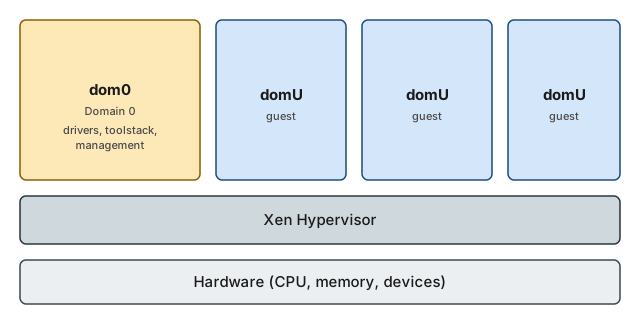
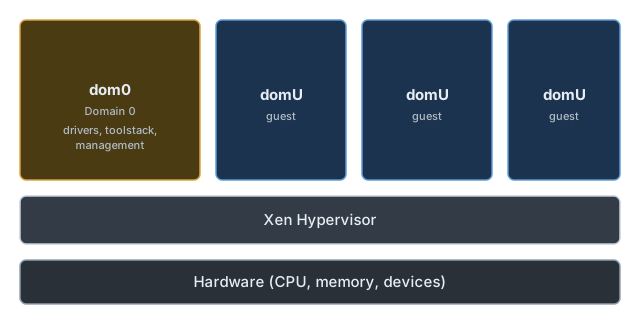
dom0 is not a layer that guests sit on top of — it is a domain like any other domU, just a privileged one. All domains, dom0 included, sit directly on the hypervisor.
Domains
Every Xen system has at least two kinds of domain:
- dom0 (Domain 0)
The privileged domain that starts first and controls the hypervisor. dom0 is a full operating system (typically Linux) that provides device drivers, management tools, and storage for the system. Without dom0, Xen cannot start guest VMs.
- domU (Unprivileged domains)
Guest virtual machines. These are the VMs you create and run. They cannot control the hypervisor or affect other domains directly. A single Xen host can run many domUs simultaneously.
Support
All Xen Project releases are supported for at least three years after their initial release. Security support extends further. See the support matrix for details on current releases.
4.22 |
4.21 |
4.20 |
|
|---|---|---|---|
Released |
2026-07-30 |
2025-11-19 |
2025-03-05 |
Supported until |
2029-07-30 |
2028-11-19 |
2028-03-05 |
Security support until |
2031-07-30 |
2030-11-19 |
2030-03-05 |